How Cross-Device Bonus Sequencing Shapes Retention Curves in Progressive Jackpot Ecosystems
Riley Günther · Aug 13, 2026
How Cross-Device Bonus Sequencing Shapes Retention Curves in Progressive Jackpot Ecosystems
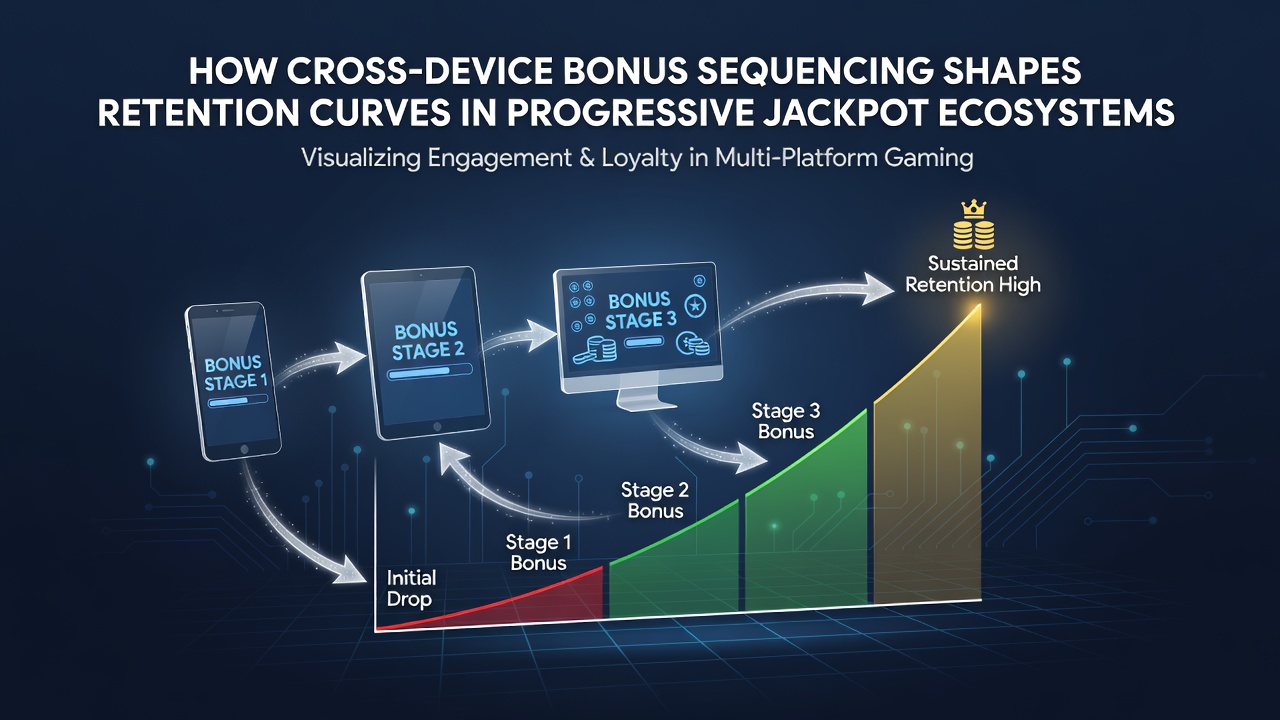
Operators track player movement between smartphones, tablets, and desktop computers as progressive jackpot networks expand across devices, and bonus sequencing has emerged as a key mechanism that influences how long individuals remain active within those ecosystems. Data collected through August 2026 shows that when bonuses unlock in a deliberate order tied to device switches, retention curves flatten less sharply after the initial seven-day period compared with single-device campaigns.
Progressive jackpot pools grow when contributions arrive from multiple platforms, yet the rate at which players return depends on whether the next bonus tier appears on the device they currently hold. Researchers who examined anonymized session logs found that sequenced rewards delivered first on mobile and then on desktop produced a measurable lift in day-14 and day-30 retention metrics across several major networks.
Mechanics of Cross-Device Sequencing
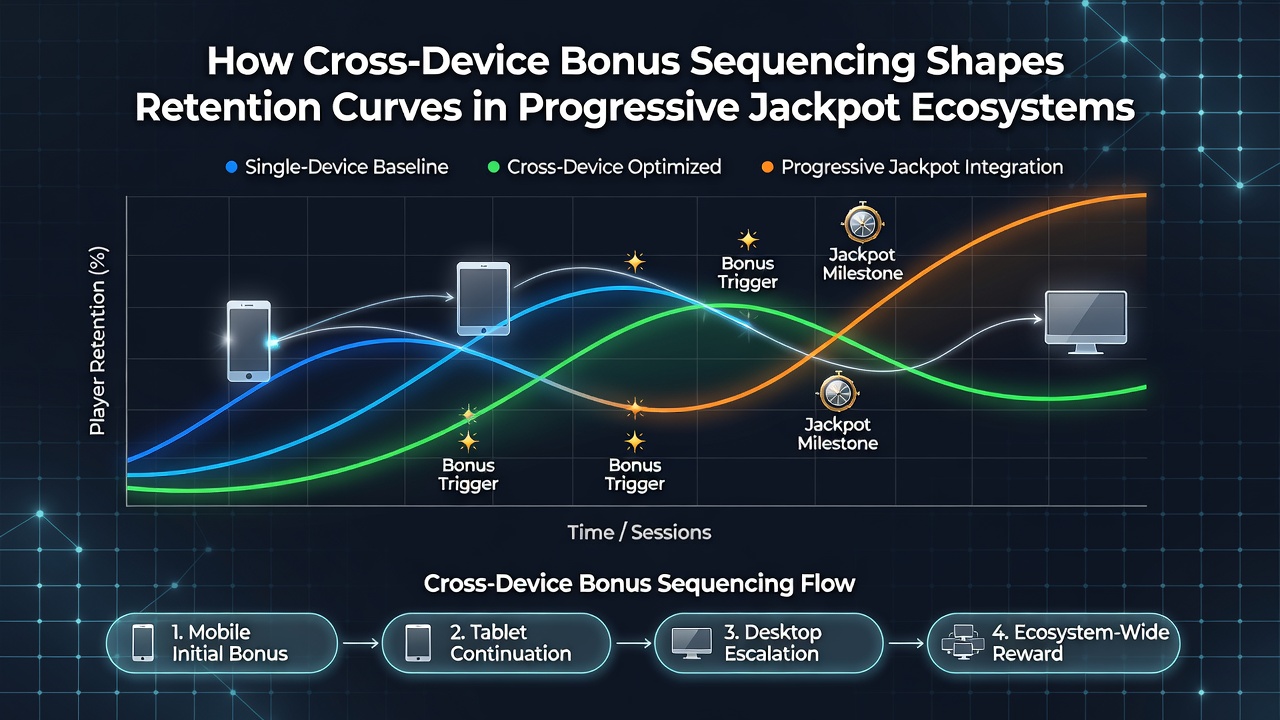
Sequencing begins when a player triggers an initial deposit or spin on one device, after which the system registers the jackpot contribution and places the next reward stage on an alternate platform. This approach forces the user to complete a device switch to claim the follow-up bonus, which in turn extends the time spent inside the ecosystem. Studies conducted on networks operating in North America and parts of Asia indicate that such forced transitions correlate with higher cumulative wager volumes before the first churn event occurs.
Platform telemetry reveals that players who receive a mobile-only bonus sequence drop off faster once they move to a desktop environment, whereas those who encounter alternating triggers maintain activity across both surfaces. The difference appears in the slope of retention curves between day 7 and day 21, where sequenced cohorts retain roughly 12 to 18 percent more accounts than control groups.
Observed Retention Patterns
Retention curves in progressive jackpot ecosystems typically show steep early decline followed by a long tail of loyal users. When bonus sequencing incorporates device diversity, the early drop becomes less pronounced and the tail lengthens. Figures released by the Australian Gambling Research Centre document that networks employing cross-device triggers recorded median player lifetimes extending from 47 days to 61 days during the first half of 2026.
Those same datasets also track the timing of jackpot contributions relative to device switches. Players who completed at least one cross-device bonus cycle contributed an average of 23 percent more to the shared pool than users who stayed on a single platform, even when total session minutes remained comparable. This pattern holds across both regulated markets in Canada and emerging jurisdictions in Southeast Asia.
Technical Implementation Across Ecosystems
Backend systems must synchronize player state across devices in real time so that bonus eligibility updates instantly when a user logs in elsewhere. Latency below 200 milliseconds keeps the experience seamless, while longer delays correlate with abandoned sequences. Industry reports compiled by the Interactive Gaming Council of Canada highlight that operators investing in unified player profiles achieved more consistent sequencing success rates during the 2025-2026 measurement window.
Progressive jackpot engines further complicate the picture because pool size updates must reflect contributions from every device without creating duplicate triggers. When the sequencing logic accounts for pool growth thresholds, players encounter bonuses that scale with network-wide activity rather than isolated device performance, which in turn sustains engagement deeper into the retention curve.
Regional Variations in Adoption
Markets differ in how aggressively they deploy cross-device sequencing. European operators regulated under frameworks outside the United Kingdom have introduced device-alternating bonuses at a faster pace than some North American counterparts, partly because multi-device usage rates sit higher among their user bases. Data from the Malta Gaming Authority shows that sequenced campaigns in that jurisdiction produced flatter retention curves through day 45 compared with non-sequenced controls.
In contrast, certain U.S. state-licensed platforms have moved more cautiously, citing integration costs with existing jackpot networks. Yet those that implemented sequencing reported retention gains similar to the European examples, suggesting the mechanism travels across regulatory environments when technical infrastructure supports it.
Conclusion
Cross-device bonus sequencing continues to reshape retention curves in progressive jackpot ecosystems by aligning reward delivery with observed player movement between devices. Evidence gathered through August 2026 demonstrates measurable extensions in player lifetime and increased contributions to shared pools when sequencing logic accounts for device transitions. As networks expand and player expectations evolve, operators who refine these sequences stand to influence the slope and length of retention curves across multiple jurisdictions.